Your Haiku Maui Acreage Guide to CPRs, Access, and Lifestyle
June 4, 2026
June 4, 2026
Wondering if that dreamy Haiku acreage is as straightforward as it looks? In 96708, the answer is often no. A beautiful rural property can come with layered questions about CPR documents, recorded access, drainage, and ongoing upkeep, so understanding those details before you write an offer can save you time, money, and stress. Let’s dive in.
Buying acreage in Haiku is often about more than size and scenery. The legal setup of the property, the way you reach it, and the way the land handles rain can all shape how you use it day to day.
That matters because these issues often overlap on Maui. A parcel might look simple on site, but the recorded legal documents, county requirements, and physical land conditions can tell a more complete story.
In Hawai‘i, a condominium property regime, or CPR, creates separate units within a recorded legal framework. Under state law, a unit is a physically or spatially separate portion of the condominium, and the declaration must describe the unit boundaries and provide an exit to a public road or to a common element leading to a public road.
For you as a buyer, that means the legal map matters just as much as the visible land. On a Haiku acreage property, you may be buying a CPR unit rather than a subdivided lot, and that can affect how access, open space, parking, and shared areas are assigned.
Hawai‘i DCCA also notes that CPR law does not control zoning or density. In plain terms, a CPR property may feel like a large private parcel, but the county still controls what can legally be built, expanded, or improved.
Before you move forward on a CPR acreage property, focus on the recorded documents. The most important items often include:
These documents help clarify what is owned exclusively, what may be shared, and whether the access and improvements are properly documented.
The DCCA states that properties with code violations or unpermitted additions generally cannot be registered for sale until they are brought into compliance with county zoning and permitting requirements. That makes permit history especially important if the property includes older structures or improvements added over time.
If you are considering acreage in Haiku, it is wise to verify that what you see on the property matches the recorded and permitted history. This is especially important when a CPR was created after earlier construction.
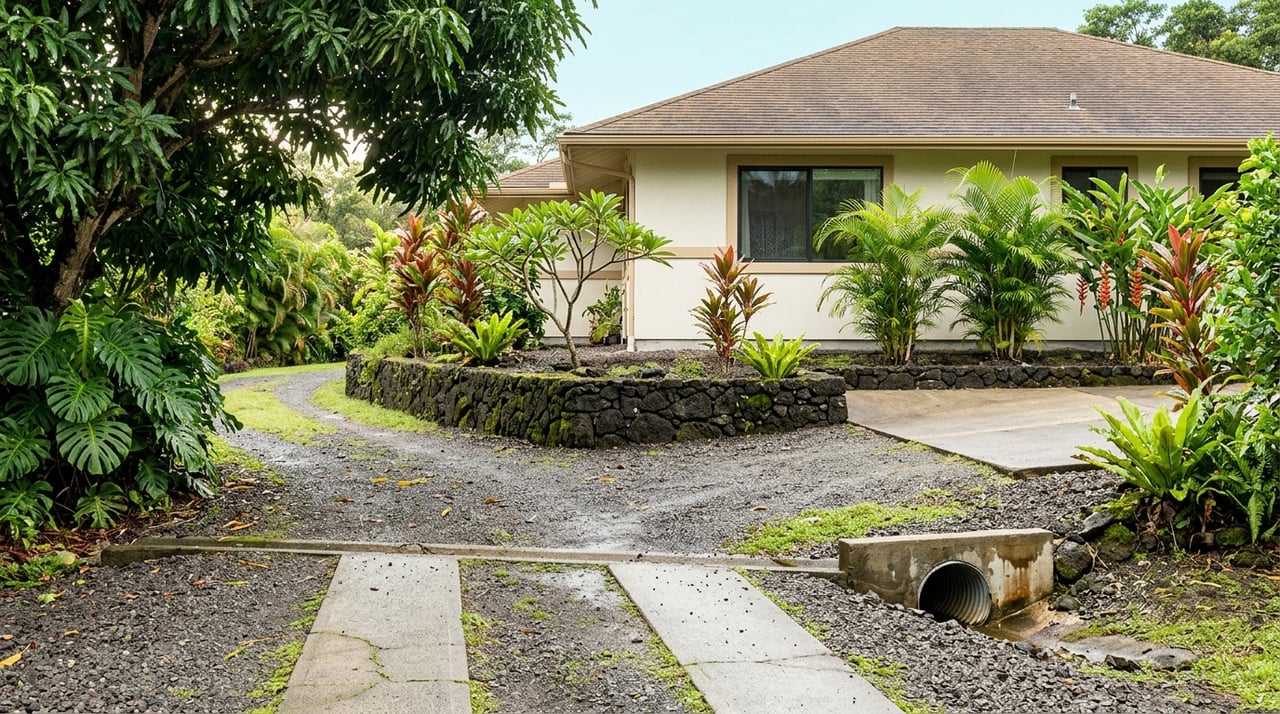
In Haiku, access is often one of the first things to confirm and one of the last things you want to assume. A parcel may appear to front a road or have a long driveway, but the real question is whether that access is legally recorded, physically usable, and clearly maintained.
Maui County explains that road jurisdiction can vary. Some roads are state highways, some are county roads, some are federal park roads, and some access arrangements involve private easements or county right-of-way issues.
The County Subdivision Section handles matters such as private easement requests, roadway dedication requests, separate lot determinations, and subdivision permits. That is a reminder that access is not always as simple as a visible driveway entrance.
County driveway permits are required to construct, reconstruct, remove, or repair any driveway on a County roadway. Maui County also states that driveways are the property owner’s responsibility to maintain.
So when you evaluate Haiku acreage, ask practical questions early:
Maui County notes that owners whose land abuts a public street must keep adjoining sidewalk or shoulder areas clean, passable, and free from weeds and noxious growths, with an exception for lots greater than 15 acres in agricultural districts. The county’s road maintenance program covers certain public roadway tasks, but private driveways and many access-related responsibilities remain with the owner.
In practical terms, rural access in Haiku often comes with a more hands-on maintenance reality than buyers expect. Brush control, grading, drainage awareness, and shoulder upkeep can all become part of ownership.
Haiku’s landscape is one reason buyers love it, but it is also one reason due diligence matters. The University of Hawai‘i Rainfall Atlas explains that the islands’ mountainous terrain and trade wind patterns create highly variable rainfall over short distances.
That pattern is especially relevant in Haiku. Two nearby properties can have noticeably different moisture levels, vegetation growth, runoff, and drainage behavior.
Maui County’s Paia-Haiku design guidelines describe Haiku as windward and located at the base of Haleakalā, with about 42 inches of rain annually. The county also notes wetter winter months, occasional torrential downpours, and heavy vegetation.
The same county guidance says that as elevation increases, rainfall, runoff, and erosion hazards increase while soil depth and soil quality decrease. For the Pauwela-Haiku association, the county describes soils as well drained and gently sloping to moderately steep, with moderately rapid permeability and a slight to moderate erosion hazard.
That means you should look carefully at how water moves across the site. Slope, drainage paths, ditch conditions, and where runoff exits the property can all affect future use and maintenance.
Maui County requires a Flood Development Permit for development in flood hazard areas. Its permit system also requires grading and grubbing permits for excavation, fill, and vegetation removal.
If you are thinking about building, expanding, clearing, or reshaping part of the land, these rules matter. Even when the acreage feels open and flexible, county requirements still guide what work can move forward.
For many buyers, Haiku acreage offers privacy, space, and a strong connection to the land. It can be a great fit if you want room for gardens, outdoor living, or simply a slower pace with more elbow room.
At the same time, rural acreage usually comes with more day-to-day responsibility than a property in a conventional subdivision. In Haiku, that often means paying close attention to vegetation, water flow, driveway condition, and seasonal maintenance.
Maui County Water Supply says the Upcountry system includes Haiku, and that water comes from rain captured by the mountains, with some flowing into streams and ditches and some percolating into underground aquifers. The county also encourages landscaping suited to local rainfall and emphasizes water conservation.
The county maintains Upcountry water-level reports for a service area that includes Haiku. For buyers, that is a useful reminder to verify current service conditions and any restrictions before closing.
Acreage ownership in Haiku may include regular tasks such as:
None of that is necessarily a downside. It simply means the lifestyle works best when you go in with clear expectations.
If you are seriously considering buying acreage in Haiku, these are some of the most important questions to answer before you remove contingencies:
On properties like these, details matter. The recorded documents and the relevant county offices are often the deciding sources for parcel-specific questions.
Acreage purchases in Haiku are rarely one-size-fits-all. Two properties with similar price points and similar views can differ in legal structure, access quality, maintenance burden, and future flexibility.
That is why local knowledge matters so much. You want to understand not just how a property looks on showing day, but how it works on paper and how it lives over time.
If you are exploring acreage in Haiku and want a team that understands Maui property nuances, lifestyle considerations, and the value of careful due diligence, connect with MacArthur Team Maui.

A Quick Read
Connect with a trusted Maui real estate team ready to guide you confidently, whether buying, selling, or exploring island opportunities tailored to your lifestyle.