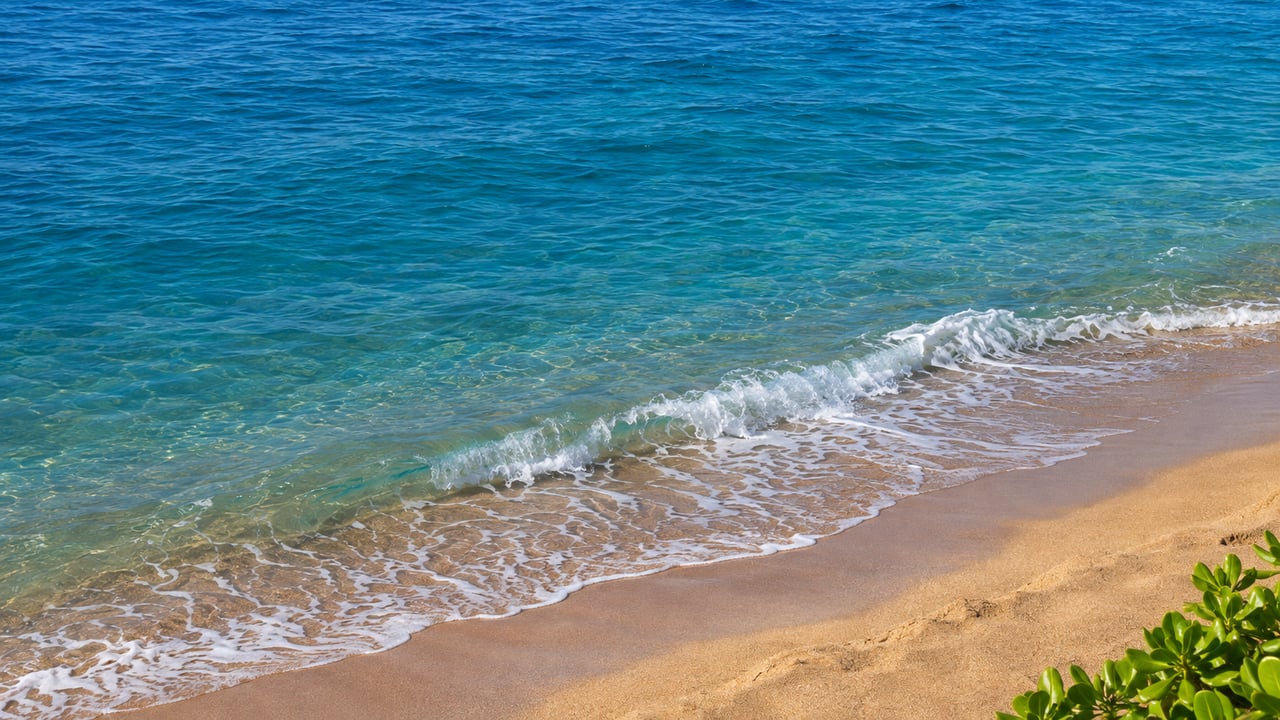
Kāʻanapali Beach Has Two Sand Problems, and Only One Comes Back Each Summer
November 12, 2026
November 12, 2026
A walk along the Kāʻanapali Beach Walk this month shows the beach at its winter thinnest. Whether that matters depends on which end you're standing on. North of Hanakaʻōʻō Point, toward Puʻu Kekaʻa, the sand moves out of place every winter and comes back every summer. South of the point, toward Canoe Beach, a gap in the reef in front of the Hyatt Regency Maui keeps cutting into the shoreline in every season.
The plan to rebuild the beach, filed this year by Pilikahakai Foundation and Kāʻanapali Operations Association, is built around that split. It sends twice as much sand to the southern stretch as to the northern one, and it does different work in each. Once you know which stretch is which, the proposal makes sense. So does the argument over it.
Between Puʻu Kekaʻa and Hanakaʻōʻō Point, sand rides the seasons. As SFGATE explained in a June 2026 look at the shoreline, North Pacific swell pushes sand south through the winter, and South Pacific swell pushes it back north in summer. So the beach in front of the northern resorts that looks thin in December is partly a seasonal low point. The same sand is still in the system, just piled farther down the beach.
What has changed is the baseline. Chris Conger, vice president of Sea Engineering and the project's lead scientific consultant, told SFGATE that Kāʻanapali was at its widest in the late 1980s. He links the narrowing since then to rising sea levels. Higher tides let more wave energy cross the reef and reach shore through the whole tidal cycle. The seasonal swing still happens, but each year it starts from a lower berm.
South of Hanakaʻōʻō Point the beach works differently. A shallow fringing reef runs from the point down to Hanakaʻōʻō Beach Park, which most people call Canoe Beach. That reef absorbs wave energy and limits how much sand the surf can move. In front of the Hyatt Regency Maui there is a break in that reef. Waves bend and speed up as they pass through the channel, and the energy lands on one section of beach. "You could call it an erosional hot spot, but all it really is is an inset of a section of the beach, where the wave is creating this dent," Conger told SFGATE.
You can see that dent from the Beach Walk. SFGATE described orange fencing closing off erosion-damaged sections of the path, plus exposed rock and drainage pipes sticking out of the sand. Summer swell doesn't fix this stretch, because the problem here isn't sand that moves away and comes back. The reef gap aims the waves at the same spot year after year.
The restoration plan, as Maui Now reported in July, would collect sand that has drifted offshore, beyond the reach of natural beach-building, and return it to shore. The target is the beach's 1988 width and height. The two stretches get different treatment:
| Hanakaʻōʻō Beach Park to Hanakaʻōʻō Point | Hanakaʻōʻō Point to Puʻu Kekaʻa | |
|---|---|---|
| How the sand behaves | Reef-protected, except for the gap in front of the Hyatt | Moves south in winter, back north in summer |
| Sand proposed | About 50,000 cubic yards | About 25,000 cubic yards |
| What it does | Widens the dry beach by 41 to 78 feet in places | Raises the berm by 3.5 feet |
| Added work | Sand placed on the beach and in shallow nearshore water | Protodunes, dune pathways and native plants to hold sand in place |
The bigger load goes to the stretch that can't rebuild itself. The northern stretch gets height instead of width. A higher berm with dunes planted behind it gives the seasonal swing more sand to work with, so the beach doesn't run as thin when winter swell moves it south.
The sand would come from offshore near Puʻu Kekaʻa, Hawaii News Now reported. A moored crane barge with an environmental clamshell bucket would lift it, a method chosen to keep turbidity down. Containment barriers would surround active work areas, and work would have to stop if turbidity outside the site goes past set limits. Project materials say the offshore collection area was cut by about 20 percent from earlier versions.
Organizers say the plan has changed a lot since it was first proposed in 2023, after feedback from canoe clubs, cultural practitioners and other community groups. Most of those changes affect people who use the beach every day:
Construction itself would be short. According to Pilikahakai Foundation, the full job, from mobilization through sand recovery, placement and demobilization, would take an estimated 63 to 75 calendar days. Afterward, crews would monitor coral, water quality and beach shape at 30 days, six months and 12 months, then once a year for three years, with an option to extend monitoring to 10 years. The resort's property owners are paying for the project privately.
None of this is new territory for Kāʻanapali. The resort started working on shoreline erosion in 2006, when it hired Sea Engineering to study restoration options. A final environmental impact statement for an earlier version was accepted in 2021, The Maui News reported.
That version was a partnership between the state and the resort group. It was close to construction when the Board of Land and Natural Resources unanimously rejected it at a meeting in March 2023. Civil Beat reported that the partners had split an $800,000 study and planned to share a project cost estimated at $10 million. After the vote, the state was returning roughly $400,000 to the resort group. According to SFGATE's account of that review, testifiers raised concerns about marine life and the undersea environment, and many called for managed retreat.
The 2026 plan answers the funding objection directly, because no public money is involved. It also comes from a new organization. Pilikahakai Foundation was set up in 2024 by Kāʻanapali Beach Resort property owners, and it describes its mission as perpetuating Native Hawaiian culture, advancing environmental stewardship and keeping public access to Kāʻanapali Beach.
The people for and against the plan disagree less about the science than about what the sand is meant to buy. Conger told Hawaii News Now that he sees the restoration as a midterm solution lasting about 20 years, and that managed retreat should be evaluated as part of a long-term plan. A West Maui shoreline advocate interviewed by the same station said replenishment is supposed to be a bridge to relocating infrastructure, and asked whether this project leads there or is "a bridge to nowhere."
That debate will play out across several public reviews, which the Maui News report and Pilikahakai's project materials describe:
If every approval comes through, construction could start in fall 2027. Until then, the beach will go through at least one more full cycle. The northern stretch will lose sand to the south this winter and get it back next summer. The stretch in front of the Hyatt will keep losing sand in both seasons, and that is where about two-thirds of the proposed sand is headed.
Kāʻanapali Beach is where our family has spent generations of mornings, and we follow every hearing that could change it. If you'd like to talk through what the restoration timeline could mean for your West Maui plans, from beach access to the stretch of shoreline closest to your door, call or text MacArthur Team Maui. We're glad to share what we know.
Which Wailea Condo Village Fits You?
Connect with a trusted Maui real estate team ready to guide you confidently, whether buying, selling, or exploring island opportunities tailored to your lifestyle.